Consciousness
What Is Quantum Consciousness? A Plain-English Guide to the Science of Mind and Reality
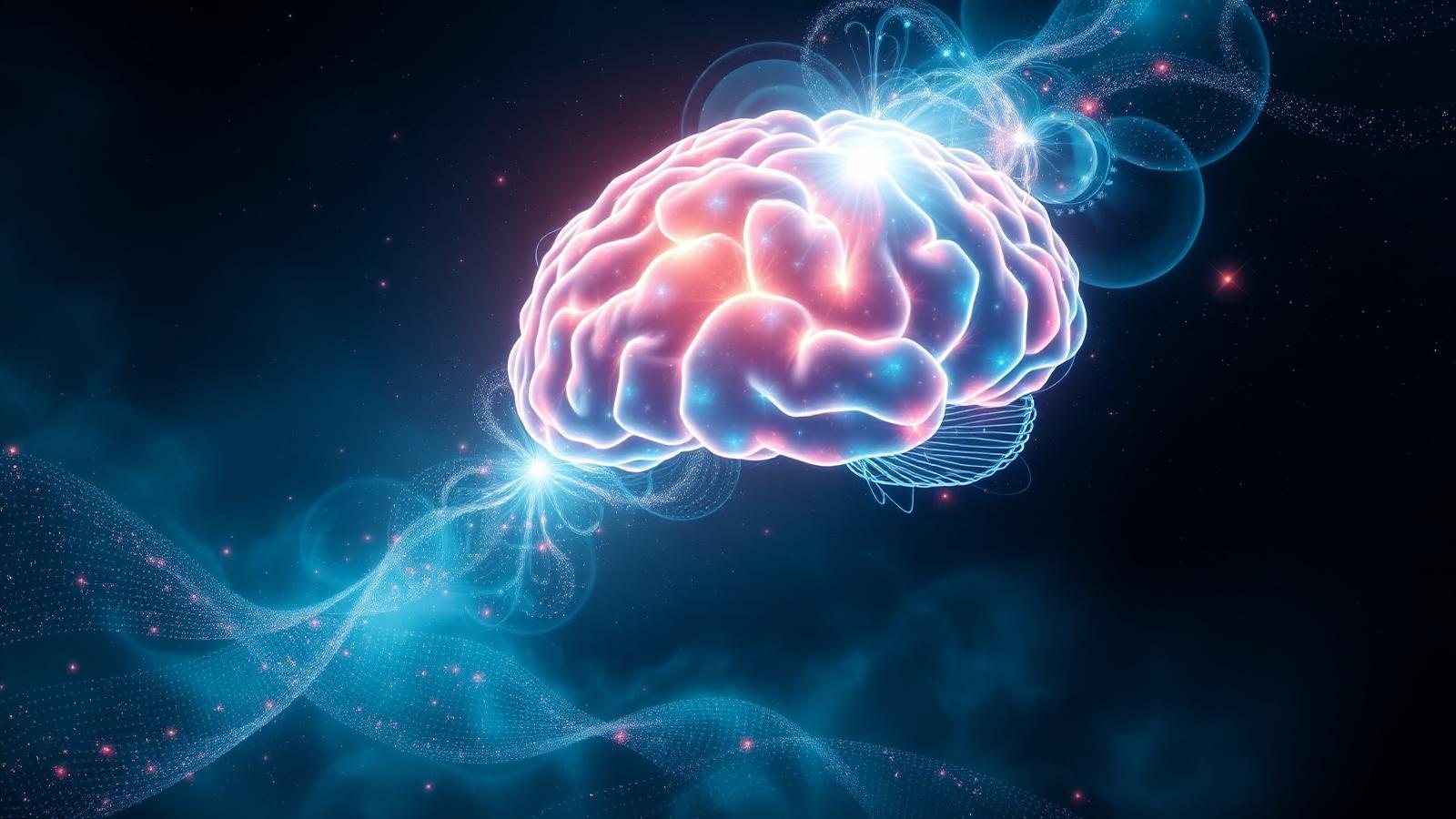
Few phrases attract more excitement, and more confusion, than 'quantum consciousness'. This guide separates the serious science from the pop-culture noise, and shows why leading physicists and philosophers keep returning to the question of how mind fits into the quantum picture.
Why the question won't go away
Classical physics treated the universe as a machine of separate parts, and consciousness as a mysterious extra we did not really need to explain. Quantum physics broke that picture. Measurement seems to play an active role. Particles behave as possibilities until observed. The clean split between observer and observed dissolves. Once that happens, the question of what consciousness is stops being purely philosophical and starts to look physical.
What quantum consciousness is not
Before the serious theories, some clean-up. Quantum consciousness does not mean 'you create your reality by thinking positive thoughts.' It does not mean particles have feelings. And the famous 'observer effect' does not require a human mind, a measuring device is enough. Serious quantum-mind research is more careful and more interesting than the memes suggest.
The main scientific proposals
1. Penrose-Hameroff: Orchestrated Objective Reduction (Orch-OR)
Physicist Sir Roger Penrose and anesthesiologist Stuart Hameroff proposed that consciousness arises from quantum computations in microtubules, tiny structures inside neurons. In their model, the brain performs quantum processes that collapse ('objectively reduce') in an orchestrated way, producing conscious moments. Orch-OR remains controversial but has survived longer than critics predicted, especially after experiments suggested quantum effects can persist in warm biological systems.
2. David Bohm: mind and matter as one enfolded order
David Bohm approached the problem from the other direction. Rather than asking how quantum processes produce mind, he asked whether mind and matter share a deeper common ground. In his implicate order, thought and matter are two aspects of one enfolded whole. Consciousness is not an accident of neurons; it is a feature of the same underlying reality that physics describes.
3. Federico Faggin and Giacomo Mauro D'Ariano: consciousness as fundamental
More recently, physicists like Federico Faggin (inventor of the microprocessor) and Giacomo Mauro D'Ariano have proposed models in which consciousness is not produced by matter at all, matter emerges from a field of conscious information. Quantum theory, on this view, is our best current description of what a conscious universe looks like from the inside.
What about the observer effect?
In quantum experiments, an unobserved system evolves as a wave of possibilities. When measured, it 'collapses' into a definite outcome. This is real, and it is strange. But most physicists agree that 'observation' means physical interaction, not conscious attention. The deeper question is whether there is any coherent line between the two. Bohm, Penrose, and Faggin, very different thinkers, all doubt that there is.
Why this matters beyond the lab
If consciousness is fundamental to reality, our picture of what it means to be human shifts. Meaning is not decorative; it is structural. Attention becomes a physical act. Dialogue, contemplation, and inner life stop being soft topics and start looking like frontier science.
How to go deeper
- Quantum Convergence, an in-depth film series bringing together physicists, philosophers, and contemplatives on the science of consciousness.
- Infinite Potential, the story of David Bohm's search for wholeness in physics and mind.
- Books: The Emperor's New Mind (Penrose), Wholeness and the Implicate Order (Bohm), Irreducible (Faggin).
Quantum consciousness is not a settled science. It is a live inquiry, one of the most important in our time, and it is being taken seriously by some of the sharpest minds in physics.
Share this article