Consciousness
Swami Vivekananda, Vedanta, and Modern Physics: An Unexpected Meeting of Minds
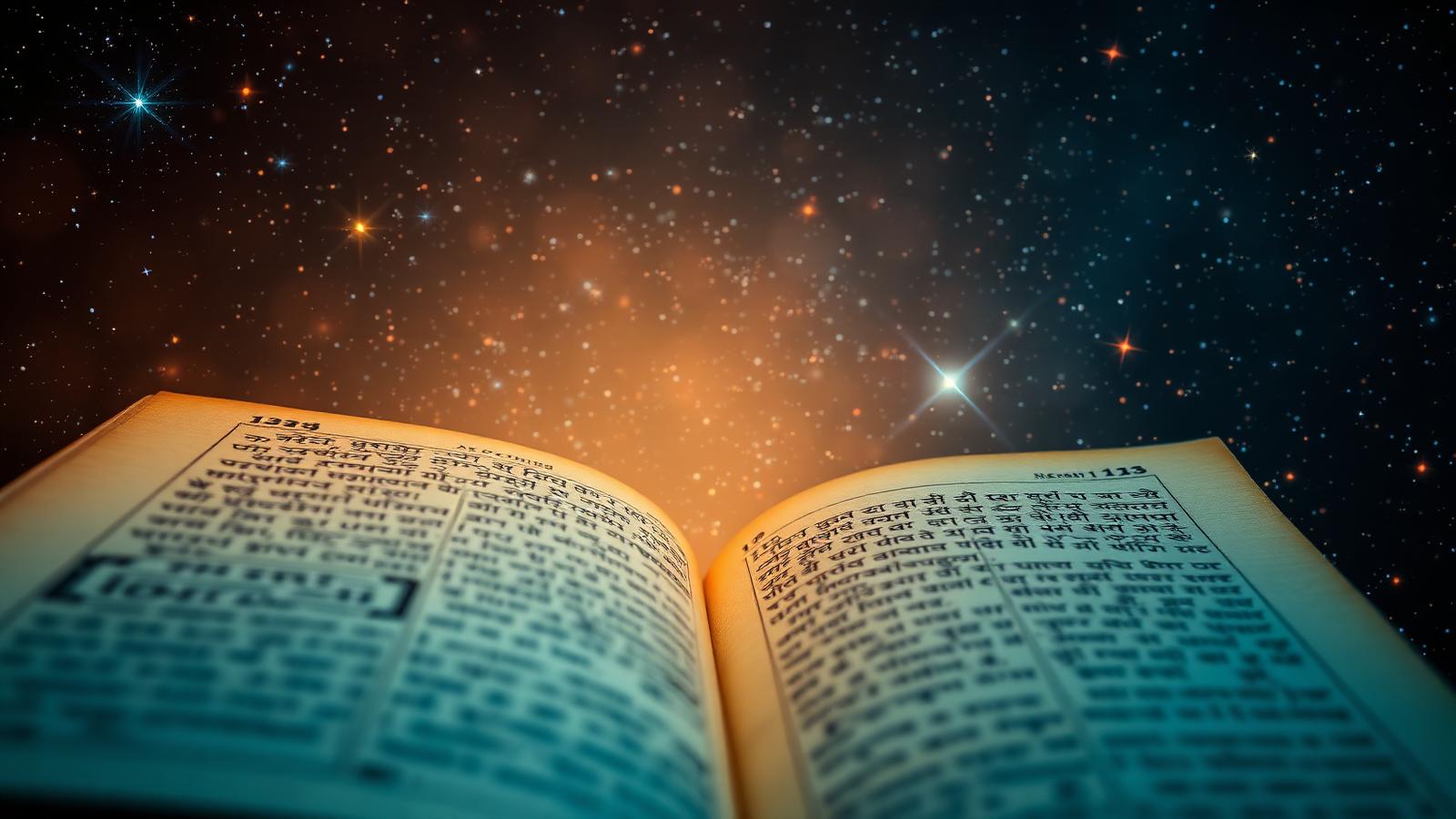
When Swami Vivekananda stepped onto the stage at the 1893 Parliament of the World's Religions in Chicago, he introduced the West to a philosophical tradition that had, for millennia, insisted on one radical idea: that reality is a single, conscious whole. What is striking, more than a century later, is how closely that idea now rhymes with the picture emerging from modern physics.
Who was Swami Vivekananda?
Swami Vivekananda (1863-1902) was an Indian monk in the tradition of Advaita Vedanta, and the foremost disciple of the mystic Ramakrishna. He brought Vedanta and yoga to a global audience, founded the Ramakrishna Mission, and became one of the most influential Indian thinkers of the modern era.
The core of Vedanta in one sentence
At the heart of Advaita Vedanta is the claim that there is one reality, often called Brahman, and that consciousness is not a byproduct of matter but its fundamental nature. What appears as many separate things is one underlying awareness expressing itself in countless forms.
The Tesla connection
Vivekananda met Nikola Tesla in New York in 1896. According to Vivekananda's letters, Tesla was 'charmed' by the Sanskrit concepts of Akasha (space/ether) and Prana (life-force / energy), and believed he could demonstrate their mathematical equivalence to mass and energy. Whether or not Tesla ever completed such a proof, the correspondence shows something remarkable: a leading Western physicist and an Indian monk sitting together and finding common ground about the nature of energy years before Einstein published E = mc².
Schrödinger, Bohm, and the Vedantic thread
Erwin Schrödinger, one of the founders of quantum mechanics, was a lifelong reader of the Upanishads. In What Is Life? he wrote that consciousness is a singular whose plural is unknown, a nearly verbatim restatement of Advaita. David Bohm, decades later, arrived at his implicate order partly through similar intuitions: that separateness is appearance, and wholeness is the reality.
"The multiplicity is only apparent. In truth, there is only one mind."Erwin Schrödinger, What Is Life?
Where Vedanta and modern physics rhyme
- Both point to a single underlying reality beneath apparent multiplicity.
- Both treat the observer as inseparable from the observed.
- Both suggest that energy, information, and consciousness are more fundamental than solid 'stuff'.
- Both take seriously the possibility that mind is a feature of the cosmos, not an accident within it.
Where they differ
Physics builds by measurement and mathematics. Vedanta builds by direct inquiry into the nature of the knower. They are not the same discipline and should not be collapsed into one. But when their conclusions begin to point in the same direction, as they increasingly do, it is worth paying attention.
Where to go next
- Raja Yoga and Jnana Yoga by Swami Vivekananda, his own words, still remarkably fresh.
- What Is Life? by Erwin Schrödinger, physics reaching toward Vedanta.
- Quantum Convergence, modern physicists and contemplatives in extended dialogue on these very questions.
Vivekananda did not need modern physics to make his case. But the fact that modern physics keeps arriving, by its own path, at similar conclusions is one of the quiet stories of our time.
Share this article