Consciousness
What Is Consciousness? The Science, the Theories, and the Question Nobody Has Solved
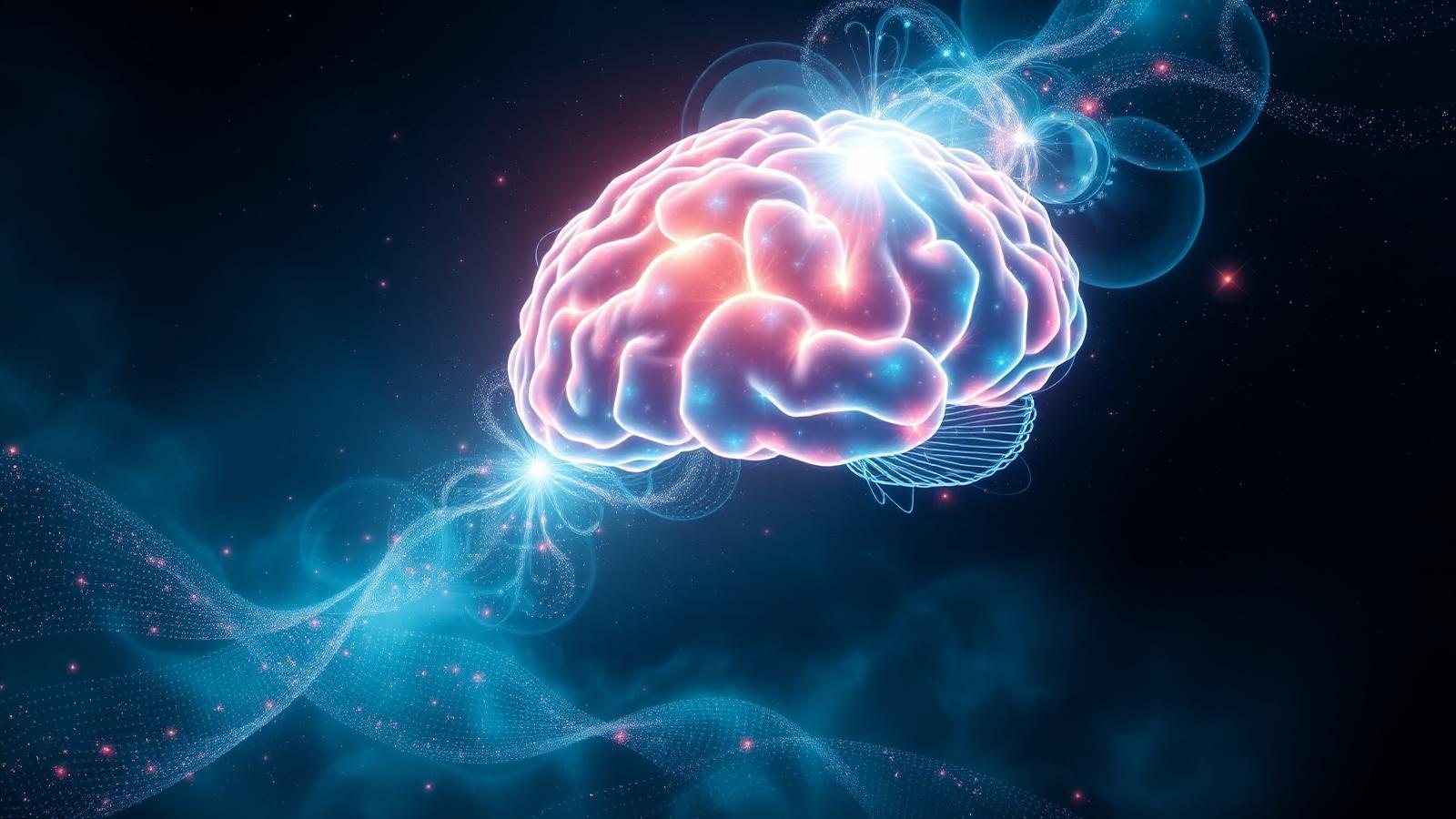
Consciousness is the one thing you cannot doubt and the one thing science cannot yet explain. You know what it is like to see red, to feel pain, to remember your childhood. No brain scan has ever shown why any of that should feel like anything at all. This guide walks through what consciousness means, what the leading scientific theories claim, where they break down, and why some physicists think the answer will change our picture of reality itself.
What does consciousness actually mean?
In everyday use, consciousness means being awake and aware. In science and philosophy it usually means something more specific: the fact that there is something it is like to be you. Philosophers call this subjective experience, or qualia. The redness of red, the sting of grief, the taste of coffee: these are the contents of consciousness.
Researchers usually separate two questions. The first is how the brain processes information, controls attention, and reports on its own states. That is difficult but tractable. The second is why any of this processing is accompanied by felt experience. The philosopher David Chalmers named that second question the hard problem of consciousness, and it remains open.
What neuroscience has established
Neuroscience has made real progress on the mechanics. We know that specific networks in the brain track specific contents of experience, that damage to particular regions removes particular abilities, and that anaesthesia reliably switches awareness off and on. Researchers can now decode rough images of what a person is looking at from brain activity alone.
- Consciousness depends on large scale integration across the cortex rather than on any single region.
- The brainstem and thalamus act as gatekeepers: without them, the cortex cannot sustain awareness.
- Much of what the brain does, including complex decision making, happens without any conscious accompaniment at all.
What none of this explains is the leap from electrochemical activity to felt experience. We can correlate. We cannot yet derive.
The leading theories of consciousness
Global workspace theory
Proposed by Bernard Baars and developed by Stanislas Dehaene, this theory treats consciousness as a broadcasting system. Information becomes conscious when it wins a competition for access to a global workspace and is made available to memory, language and planning. It explains why we can only hold a little in mind at once. It does not explain why broadcast information should feel like anything.
Integrated information theory
Giulio Tononi's theory proposes that consciousness is identical to a system's capacity to integrate information, measured by a quantity called phi. The more a system's parts constrain each other as an irreducible whole, the more conscious it is. This is a bold move: it makes consciousness a physical property with a scale, and implies that very simple systems have a faint glimmer of experience.
Higher order and predictive theories
Other accounts argue that a state becomes conscious when the brain represents itself as being in that state, or that consciousness is the brain's best running prediction of its own body and world. These theories are productive in the laboratory, and they sharpen the question rather than dissolving it.
Panpsychism and consciousness as fundamental
A growing minority of philosophers and physicists take the opposite route. Instead of building experience out of matter, they treat experience as a basic feature of the world, like mass or charge, present in simple form everywhere and combined into rich forms in brains. This is panpsychism. It avoids the hard problem by refusing its starting assumption, at the cost of a new puzzle: how do simple experiences combine into a single unified mind?
Where quantum physics enters the conversation
Quantum mechanics unsettled the tidy separation between observer and observed. In standard formulations, a measurement produces a definite result out of a range of possibilities, and the theory itself does not say what counts as a measurement. That gap has invited a century of speculation about the role of mind in physics.
The physicist David Bohm took a different route. He rejected the idea that reality is undefined until observed, and built an alternative interpretation in which particles always have definite positions guided by a real field. His deeper claim was that matter and mind are two aspects of one enfolded process, which he called the implicate order. On that view, consciousness is not an anomaly to be explained away; it is evidence about the structure of reality.
"Deep down the consciousness of mankind is one. This is a virtual certainty because even in the vacuum matter is one; and if we don't see this, it's because we are blinding ourselves to it."David Bohm
Common questions
Is consciousness in the brain?
Every reliable change to conscious experience we know about involves the brain, so the brain is clearly necessary for human consciousness. Whether the brain generates experience or channels something more basic is exactly what the competing theories disagree about.
Can artificial intelligence be conscious?
Current language models produce fluent reports about their inner life without any evidence of felt experience behind them, which is precisely why the question is hard. On global workspace views, an AI with the right architecture might qualify. On integrated information views, today's hardware integrates information in the wrong way and would remain dark no matter how capable it becomes.
Does consciousness survive death?
Science has no confirmed answer. Reports of near death experiences during cardiac arrest are documented and unexplained, but they are consistent with several interpretations. Honest positions here range widely, and the disagreement tracks the deeper disagreement about whether experience is produced by the brain or is more fundamental than it.
Why the question matters
How you answer this question shapes almost everything else: how we treat animals, how we think about machines, how we understand meditation and psychedelics, how we handle the end of life. It also shapes how we see ourselves. A universe in which consciousness is an accidental byproduct is a very different place from one in which it belongs to the fabric of things.
Where to go next
- Read our guide to the hard problem of consciousness for the philosophical core of the debate.
- Read our guide to panpsychism if the idea of consciousness as fundamental interests you.
- Read our guide to quantum consciousness for a careful look at what physics does and does not claim.
Share this article