Science & Philosophy
Science and Spirituality: Can They Really Meet?
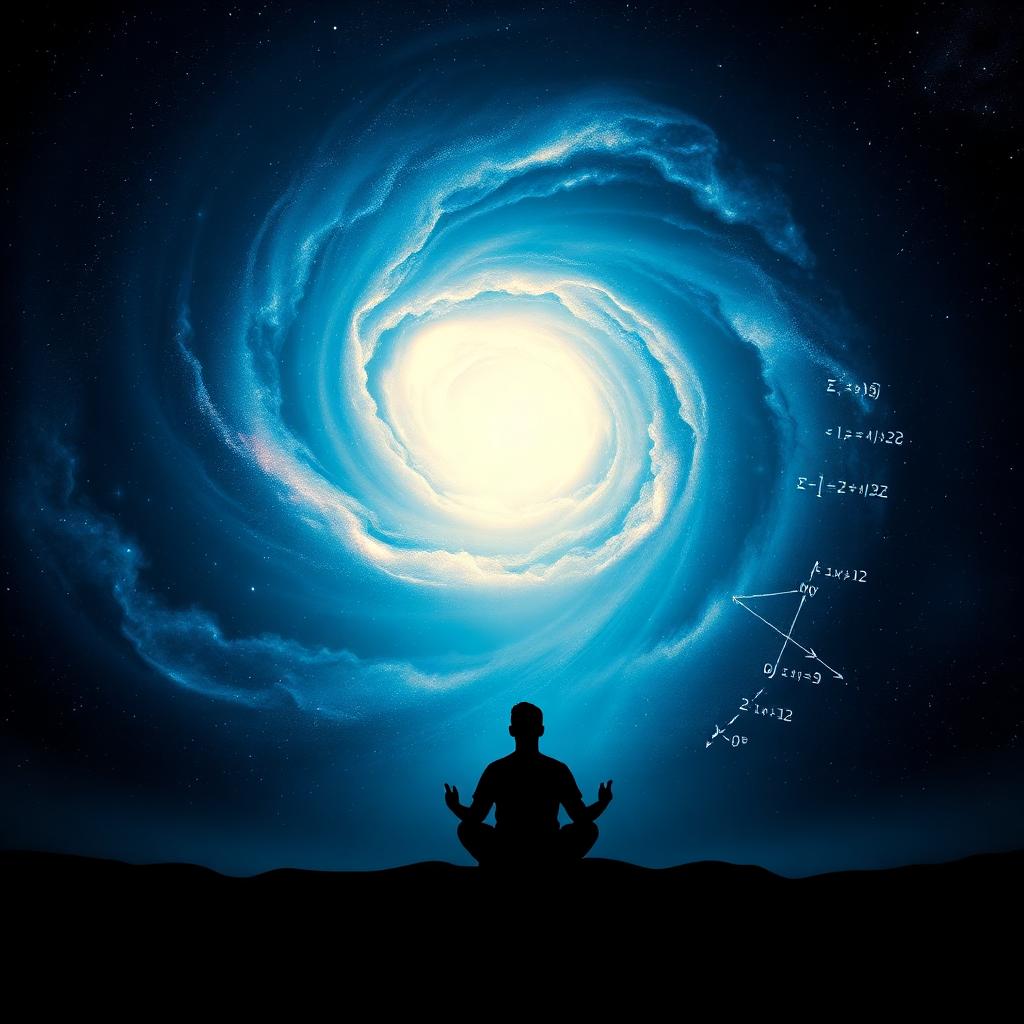
Every few years someone announces that science and spirituality have finally been reconciled. Usually the argument is thin, the physics is wrong, and the spirituality is watered down. That does not mean the question is empty. There is a serious version of it, and it has occupied some of the most careful thinkers of the last century.
Two questions, not one
The first question is factual. Do science and spirituality make claims that overlap, and if so, do they agree? The second is deeper. Are science and contemplative inquiry two ways of asking about the same reality, one from the outside and one from the inside? These get confused constantly. Keeping them apart is the beginning of a serious conversation.
Where the cheap answers fail
Popular writing loves to say that quantum physics has proved this or that ancient teaching. Most of it does not survive contact with a physicist. Wavefunctions are not karma. Entanglement is not oneness in a mystical sense. Real convergence, if there is any, is more modest and more interesting than the memes suggest.
Where the serious conversation lives
Genuine dialogue has come from thinkers who took both sides seriously without collapsing one into the other. A short list:
- David Bohm, quantum physicist, and Jiddu Krishnamurti, contemplative teacher, in decades of recorded dialogues on thought, wholeness and observation.
- Erwin Schrödinger reading the Upanishads while helping to build quantum theory.
- Swami Vivekananda addressing scientific audiences on consciousness as fundamental.
- Modern voices like Federico Faggin, Bernardo Kastrup and Swami Sarvapriyananda testing where physics and nondual philosophy actually touch.
What they tend to agree on
Different traditions, different vocabularies, but a few common threads appear when the conversation is honest:
- The everyday picture of separate objects in empty space is a useful approximation, not the last word.
- Consciousness is not obviously a side effect of matter, and treating it as one may be a mistake.
- Careful first-person inquiry and careful third-person science are both disciplined activities, not opposites.
- Any final account of reality will have to explain how there is anyone here to account for it.
Where they clearly disagree
Science does not endorse specific metaphysical or religious doctrines, and it should not pretend to. Contemplative traditions are not in the business of publishing peer-reviewed papers on the Higgs boson. Confusing the two flattens both. The interesting territory is not where one absorbs the other, but where they can inform a shared question without losing their own methods.
"The ability to perceive or think differently is more important than the knowledge gained."David Bohm
A practical stance
You do not have to choose between rigour and depth. You can take physics seriously and still take your own experience seriously. You can read a paper on decoherence in the morning and sit quietly in the evening. The point is not to fuse the two into a single doctrine. The point is to stop pretending that either one is complete without the other.
Where to go next
- Watch Infinite Potential on David Bohm and the physics of wholeness.
- Watch Quantum Convergence for long-form dialogues between physicists and contemplatives.
- Read The Ending of Time by J. Krishnamurti and David Bohm.
Share this article