Quantum Physics
Quantum Immortality Explained: The Many Worlds Idea That Won't Go Away
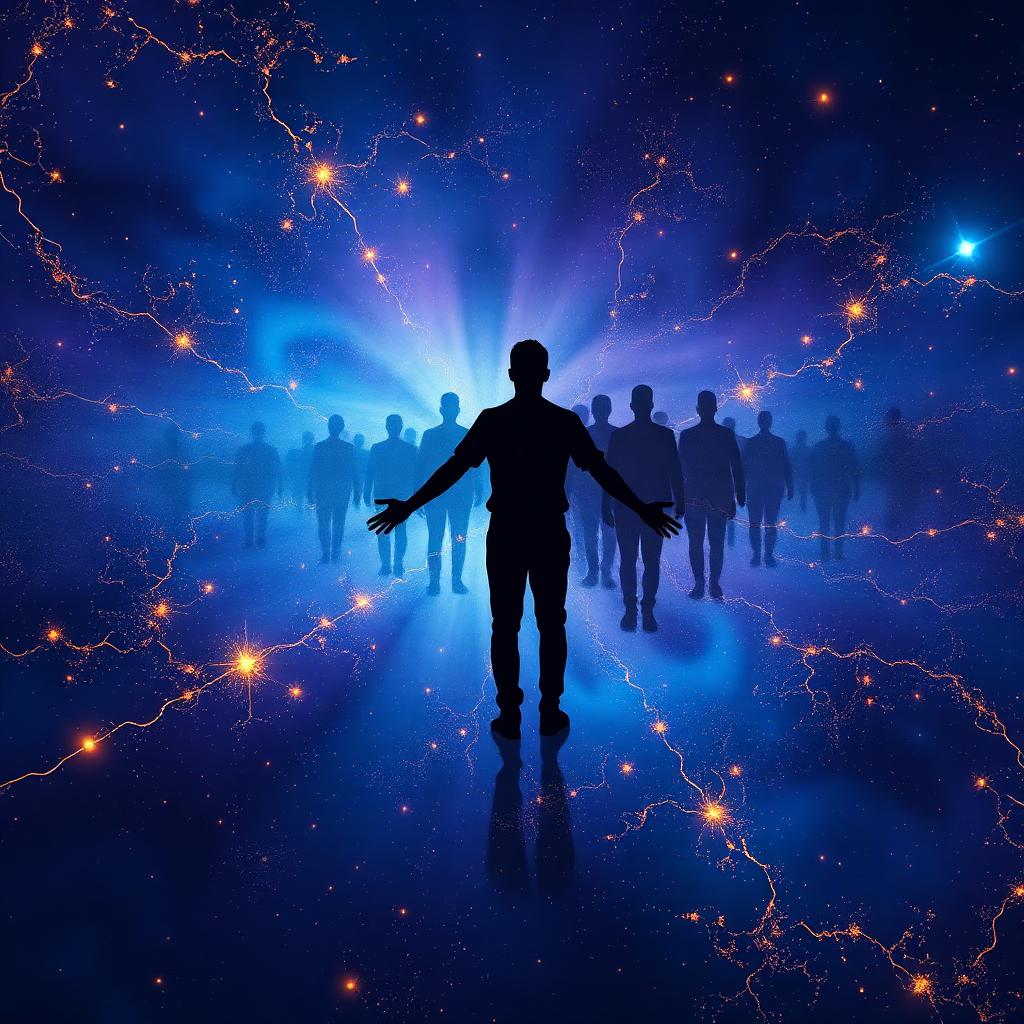
Quantum immortality is one of the strangest ideas in modern physics, and one of the most misunderstood. It is not a promise that you cannot die. It is a thought experiment about what would follow if the many worlds interpretation of quantum mechanics were true. Along the way it raises real questions about identity, probability, and what consciousness is actually doing when the universe splits. Here is what quantum immortality actually says, where it comes from, and why serious physicists both entertain it and reject it.
The many worlds interpretation, briefly
The many worlds interpretation was proposed by Hugh Everett III in his 1957 Princeton doctoral thesis. Everett was uneasy with the standard Copenhagen story, in which the quantum wave function mysteriously collapses whenever an observation is made. He argued that the wave function never collapses. Instead, every possible outcome of every quantum event is realized in a different branch of reality.
Toss a quantum coin. In one branch it lands heads, and a version of you sees heads. In another branch it lands tails, and a version of you sees tails. Both are equally real. The universe does not choose. It splits.
Where quantum immortality comes from
Take that picture seriously and apply it to death. Suppose you are in a situation in which a genuinely quantum event decides whether you live or die. In some branches you die. In some branches, however improbable, you survive. You cannot experience the branches in which you have died, by definition. From the inside, your stream of consciousness always continues, because you can only ever find yourself in a branch where you have not died.
This is quantum immortality. It is the observation that in a many worlds universe, a first person observer would always find themselves in a surviving branch, even if the surviving branches were vanishingly rare.
Quantum suicide: the thought experiment
The physicist Max Tegmark sharpened the idea with a thought experiment called quantum suicide. A researcher sets up a device tied to a genuinely quantum trigger. Each cycle, there is a fifty percent chance the device kills them. In the many worlds picture, in half the branches they die and in half they survive. Run it enough times and the survivor is, from their own point of view, still alive after an absurd number of cycles. To any outside observer, the researcher is almost certainly dead. To the surviving self, quantum mechanics looks like a strange guardian angel.
Tegmark, importantly, is not encouraging anyone to try it. He is drawing out the consequences of taking many worlds literally, and letting the reader feel how uncomfortable those consequences become.
Why almost no physicist calls quantum immortality a hope
Even physicists who take many worlds seriously do not treat quantum immortality as a comfort. Several reasons.
- Most deaths are not caused by a clean, single quantum event. Aging, disease, and accidents are messy, classical, macroscopic processes.
- The surviving branches are extremely low measure. Formally you always survive; practically, the versions of you that live to be a thousand are a vanishing sliver of a vanishing sliver.
- The people around you almost certainly experience you dying. Immortality without anyone to share it with is a bleak prize.
- Many philosophers argue that a chain of ever less probable survivors is not really you in any morally meaningful sense.
What the debate is really about
The interesting question is not whether you personally will live forever. It is what quantum immortality reveals about how we think about identity, probability, and consciousness. Standard probability treats the observer as a spectator picking outcomes with certain likelihoods. Many worlds, taken literally, makes the observer a branching structure, present in many outcomes at once.
This is where the argument connects to the deeper conversation on consciousness. David Bohm, whose implicate order offers a different reading of quantum mechanics, argued that observers are not add-ons to physics but participants in an unbroken whole. Everett's picture and Bohm's are technically different theories, but they share an intuition that the standard textbook story leaves the observer awkwardly outside the equations.
Is many worlds even correct?
Many worlds is one of a small handful of live interpretations of quantum mechanics. Others include Copenhagen, pilot wave theory (developed by Louis de Broglie and David Bohm), QBism, and objective collapse models. All of them are consistent with every experiment done so far. Which one is right is not yet a matter of experiment. It is a matter of which set of assumptions you find least unreasonable.
So quantum immortality is a thought experiment resting on an interpretation that may or may not turn out to describe the world. It is not a scientific prediction. It is a stress test for one of the strangest theories physicists take seriously.
What to take away
- Quantum immortality is not a promise of eternal life. It is a consequence of taking many worlds literally, and even its supporters treat it with unease.
- It sharpens real questions about identity, probability, and the role of the observer in quantum physics.
- It shows how much depends on which interpretation of quantum mechanics you choose. That choice is not decided by experiment alone.
- It underlines why consciousness keeps returning to the center of the quantum debate, even when physicists try to keep it out.
Where to go next
- Read our explainer on pilot wave theory to see the Bohm alternative to many worlds.
- Explore the observer effect for the classic puzzle that started the whole conversation.
- Watch Infinite Potential to meet the physicist who argued that observers cannot be quietly removed from the equations.
Share this article