Consciousness & Reality
Panpsychism Explained: Is Consciousness a Fundamental Feature of Reality?
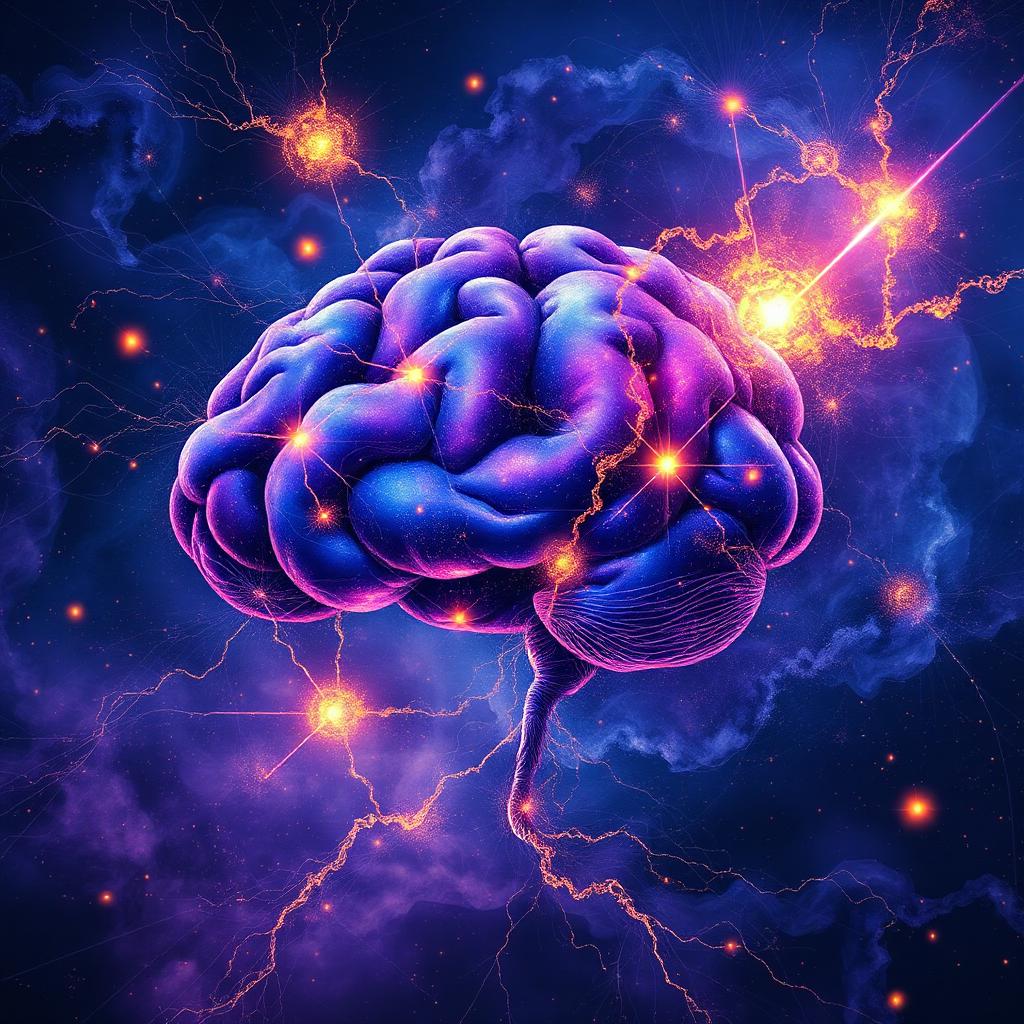
For most of the twentieth century, serious philosophers and scientists treated one idea as an embarrassment: that consciousness might be a basic ingredient of reality, not a late accident produced by complicated brains. That idea is panpsychism, and it is having a quiet revival. Philosophers like David Chalmers, Galen Strawson, and Philip Goff, along with physicists open to a wider view of mind, argue that panpsychism may be the least strange option once you take the hard problem of consciousness seriously. Here is what panpsychism actually says, what it does not say, and why it matters.
What panpsychism is
Panpsychism is the view that consciousness, or something like proto experience, is a fundamental feature of the natural world. It is not confined to human brains, animal brains, or nervous systems. It goes all the way down. In the simplest form of the view, even electrons and quarks have some vanishingly small inner aspect, from which the rich consciousness of a human being is built up.
This sounds outrageous at first hearing. It sounds less outrageous the moment you notice that the alternative, consciousness suddenly appearing from complete non consciousness at some level of neural complexity, is not obviously less strange.
What panpsychism is not
- Panpsychism does not say your coffee mug has thoughts, feelings, or opinions.
- It does not say rocks meditate or that atoms have goals.
- It does not require gods, spirits, or new age metaphysics.
- It is a claim about the raw ingredients of reality, not about what elaborate minds look like.
Why serious people are looking at it again
The philosopher David Chalmers made the case sharpest with his hard problem of consciousness in 1995. Even a complete map of every neuron, every synapse, every electrical firing in the brain would not explain why any of it feels like anything from the inside. There is an explanatory gap between physical processes and subjective experience, and it is not the kind of gap more brain data alone can close.
Faced with that gap, philosophers have essentially three options. Deny consciousness exists (eliminativism, deeply implausible). Insist it will one day pop out of physics we have not discovered yet (a promissory note, not a theory). Or accept that experience is fundamental, and see where that leads. That last road is panpsychism.
The combination problem, honestly stated
Panpsychism has a genuine puzzle at its heart. If tiny bits of proto experience are everywhere, how do they combine to produce the unified, coherent, first person consciousness of a human being watching a sunset? This is called the combination problem, and it is the main technical difficulty panpsychist philosophers work on.
Several strategies are being explored, from cosmopsychism, which flips the picture and treats the universe itself as the fundamental conscious whole from which individual minds are derived, to integrated information theory, which offers a formal account of how simple experiences might integrate into more complex ones. None of these is finished. All of them are moving.
Panpsychism and physics
Physics does not tell you what matter is made of. It tells you what matter does. It gives you the mathematics of how physical quantities relate to each other, and it stops there. That leaves room, without contradicting any known experiment, for consciousness to be part of what those quantities are, not just what they do.
This is the opening David Bohm pointed at when he argued that mind and matter are two aspects of one implicate order. It is also the opening physicists like Federico Faggin and philosophers like Bernardo Kastrup enter from different directions. The empirical world stays exactly as science describes it. What changes is the story about the substrate.
Why panpsychism matters outside philosophy
If consciousness is not a side effect of complicated brains but a basic feature of reality, then several human intuitions look less naive. Meditation, contemplative practice, artistic experience, and moments of felt connection are not simply computational tricks. They may be real contact with a real dimension of the world.
Panpsychism also changes how we think about artificial intelligence, animal minds, ecology, and the ethics of how we treat other living things. If consciousness is graded and pervasive, the moral circle widens on principled, not sentimental, grounds.
How to think about panpsychism responsibly
- Treat it as a serious philosophical option, not a slogan. It is a set of arguments, not a mood.
- Read the primary thinkers. Chalmers, Strawson, Goff, and Kastrup disagree with each other in useful ways.
- Notice that rejecting panpsychism forces you to accept something else that has its own steep problems.
- Distinguish scientific evidence from metaphysical framing. The evidence is the same for everyone. The framing is where the argument lives.
Where to go next
- Read our overview of the hard problem of consciousness for the argument that pushed panpsychism back into serious debate.
- Explore quantum consciousness for the physics side of the picture.
- Watch Quantum Convergence to hear scientists and philosophers argue this out on screen.
Share this article