Consciousness & Reality
Near Death Experiences and Consciousness: What NDEs Suggest About the Mind
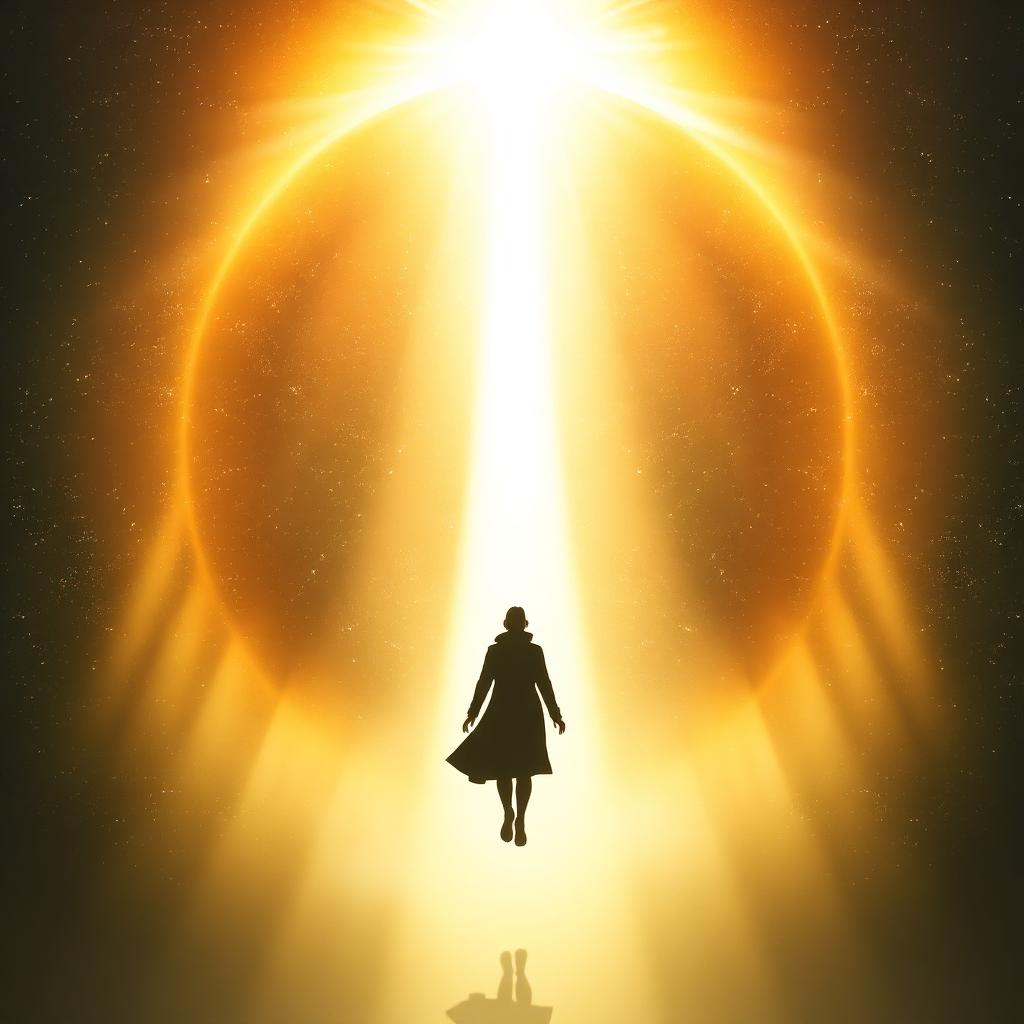
Millions of people around the world report the same strange story. Their heart stops, or their brain is starved of oxygen, and instead of nothing, they experience a rich, vivid, often life changing state of awareness. Some travel down a tunnel of light. Some watch their own resuscitation from above. Some meet figures they describe as radiant, loving, and utterly familiar. These are near death experiences, and the research on them has quietly grown into one of the most challenging bodies of evidence in the study of consciousness.
What counts as a near death experience
A near death experience, or NDE, is a set of unusually consistent sensations reported by people who have come close to biological death, or who have been clinically dead and then resuscitated. Cardiologist Pim van Lommel, psychiatrist Bruce Greyson, and physician Sam Parnia have spent decades documenting them. The features repeat across cultures, ages, and belief systems.
- A sense of leaving the body and observing the scene from outside it.
- Movement through a dark space, often described as a tunnel.
- Encountering a warm, unconditional light.
- A life review in which whole stretches of memory are re-experienced with new understanding.
- Meeting deceased relatives or luminous beings.
- A boundary or choice point, and a return to the body.
The scale of the evidence
NDEs are not rare. Studies in cardiac units, including van Lommel's 2001 paper in The Lancet, estimate that around ten to twenty percent of resuscitated patients report one. Millions of accounts have been gathered by researchers at the University of Virginia's Division of Perceptual Studies, the International Association for Near-Death Studies, and other groups. The consistency across accounts is what makes the phenomenon hard to dismiss.
Standard explanations, and where they strain
Mainstream neuroscience offers several candidate explanations. Oxygen deprivation can trigger tunnel vision. Endorphin release can produce feelings of bliss. REM intrusion can generate vivid imagery. Damaged temporoparietal regions can produce out of body sensations. Each of these is real, and each accounts for some part of the picture.
The difficulty is that the deepest NDEs occur during periods when the brain should not be producing organized experience at all. Van Lommel's cardiac patients reported clear, structured, sequential awareness during flatline EEG. Some accurately described events in the room, or in other rooms, that they could not have seen. Sam Parnia's AWARE studies at hospitals in the United States and the United Kingdom have gathered similar cases under careful protocols.
You do not need to accept a supernatural interpretation to notice that the timing is a real problem for the strict view that consciousness is only produced by an active brain.
Why NDEs matter for the consciousness debate
The dominant view in neuroscience is that consciousness is generated by the brain, in the same way a computer produces output. NDEs push against that assumption at its weakest point. If organized, meaningful, later verifiable awareness can occur when the brain is offline, then consciousness may not be produced by the brain alone. It may be that the brain shapes and filters something more fundamental, the way a radio tunes a signal it does not create.
This is the view held by a growing minority of scientists working at the frontier of consciousness research, including researchers connected to the Infinite Potential and Quantum Convergence conversations. It does not require abandoning science. It requires taking the data seriously.
The transformations people report
Whatever the mechanism, the after effects of a deep NDE are remarkably consistent. People report a lasting loss of fear of death, a stronger sense of purpose, more compassion, less attachment to status and money, and a felt certainty that consciousness is not confined to the body. Marriages change. Careers change. Some people never fit back into the lives they had before.
This too is data. Whatever an NDE is, it produces measurable, durable, positive changes in the people who have one, of a kind that ordinary therapies rarely match.
How to read the field responsibly
- Take the accounts seriously as human experience. They are not hallucinations in the everyday sense.
- Resist the two easy exits. Neither instant dismissal nor instant belief does justice to the evidence.
- Read the primary researchers directly. Van Lommel, Greyson, Parnia, and Kenneth Ring write carefully and cite the data.
- Remember that a single NDE does not prove a metaphysics. A large, converging body of them across cultures and decades is a different kind of signal.
The wider picture
NDEs sit inside a larger question that quantum physics and philosophy of mind have been circling for a hundred years. Is consciousness a late arrival in a mechanical universe, or is it woven into the ground of reality? Physicists like David Bohm argued for the second view long before NDE research became mainstream. The data from resuscitation medicine is now catching up with an intuition that mystics, philosophers, and a few careful scientists have held for a long time.
Where to go next
- Read our guide to quantum consciousness for the physics side of the debate.
- Explore the hard problem of consciousness to see why the brain-only view struggles even without NDEs.
- Watch Quantum Convergence for a documentary conversation among scientists and thinkers at the edge of this question.
Share this article