Consciousness & Mind
The Hard Problem of Consciousness: Why It Refuses to Go Away
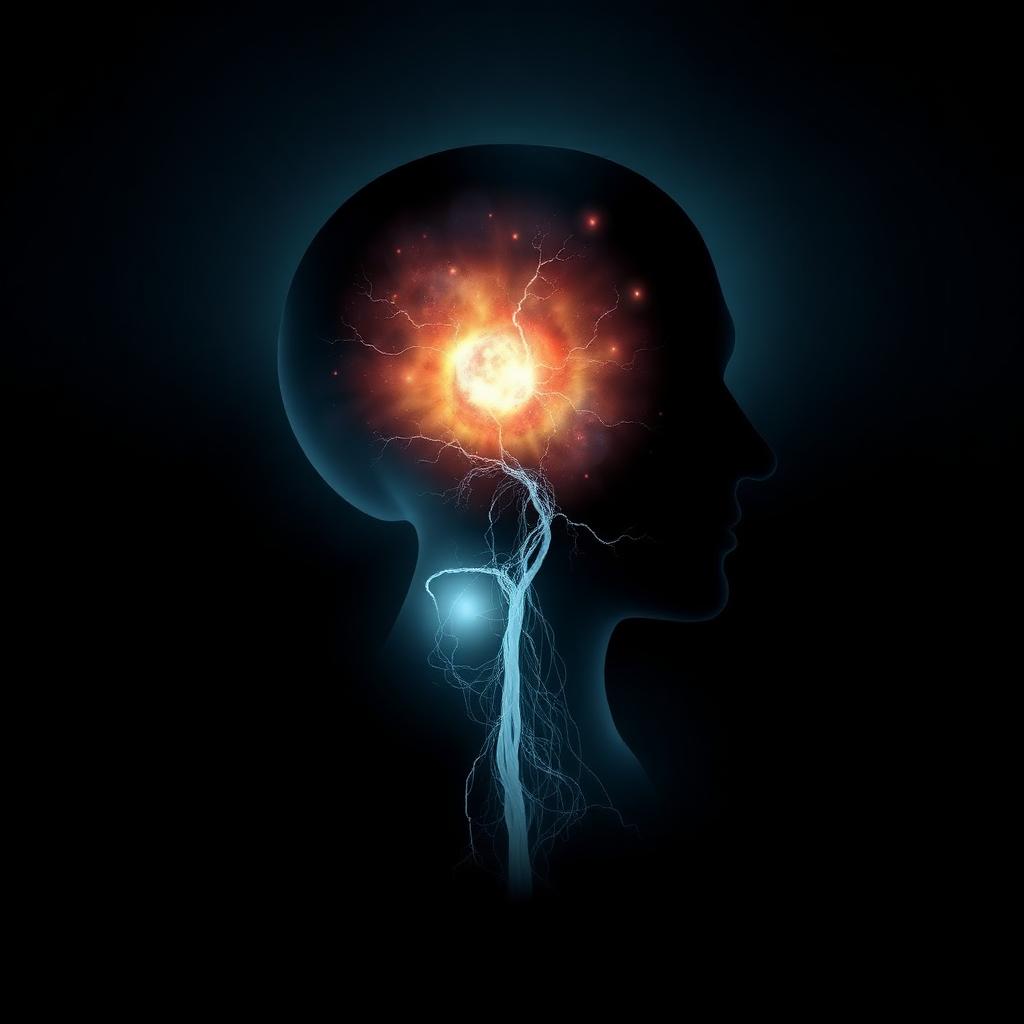
Neuroscience can map the brain in extraordinary detail. It can tell you which regions light up when you see red, feel fear, or hear a song. What it cannot yet explain is why any of that is accompanied by experience at all. This is the hard problem of consciousness, and it is one of the most important open questions in science.
The easy problems and the hard one
In 1995 the philosopher David Chalmers drew a line between what he called the easy problems of consciousness and the hard one. The easy problems are about mechanism: how the brain integrates information, controls attention, produces reports about itself. Difficult, but tractable. The hard problem is different. It asks why there is something it is like to be you at all.
"Why should physical processing give rise to a rich inner life at all? It seems objectively unreasonable that it should, and yet it does."David Chalmers
What qualia are
Philosophers use the word qualia for the felt qualities of experience. The specific redness of red. The taste of coffee. The ache of grief. You can describe the wavelength of light or the chemistry of caffeine in complete detail without ever touching what those things are like from the inside. That gap is the hard problem in miniature.
Why the standard answer feels incomplete
The usual scientific move is to say that consciousness will eventually be explained as a kind of computation or emergent property of the brain. This may be right. But it does not, so far, tell us why any computation is accompanied by experience, rather than running in the dark. A perfectly detailed neural model would still leave that question open.
Serious responses on the table
- Illusionism: experience only seems irreducible; a full theory of the brain will dissolve the puzzle.
- Integrated Information Theory (Tononi): consciousness is a fundamental quantity tied to how information is integrated in a system.
- Global Workspace theories: consciousness is what happens when information is broadcast widely across the brain.
- Panpsychism: some form of experience is basic to matter; complex minds are built from simpler ones.
- Consciousness-first views (Faggin, Kastrup, others): mind is fundamental and matter is what mind looks like from the outside.
Where physics enters the picture
Quantum physics does not solve the hard problem, but it complicates the assumption that we already know what matter is. The measurement problem, nonlocality, and the observer effect suggest that the classical picture of dead stuff in motion is not the final word. Thinkers like David Bohm, Federico Faggin and Bernardo Kastrup argue that any honest theory of consciousness will have to be developed alongside a deeper theory of physics, not bolted on afterwards.
Why it matters
The hard problem is not just an academic puzzle. How we answer it shapes how we think about artificial intelligence, animal welfare, medicine at the end of life, and the meaning of a human being. A civilisation that treats consciousness as an accident will build very different institutions than one that treats it as fundamental.
Where to go next
- Watch Quantum Convergence for long-form dialogues on consciousness, physics and reality.
- Read The Conscious Mind by David Chalmers for the original statement of the problem.
- Explore Irreducible by Federico Faggin for a consciousness-first perspective from a leading physicist.
Share this article