Consciousness & Reality
Are We Living in a Simulation? Physics, Consciousness, and the Real Question Behind the Theory
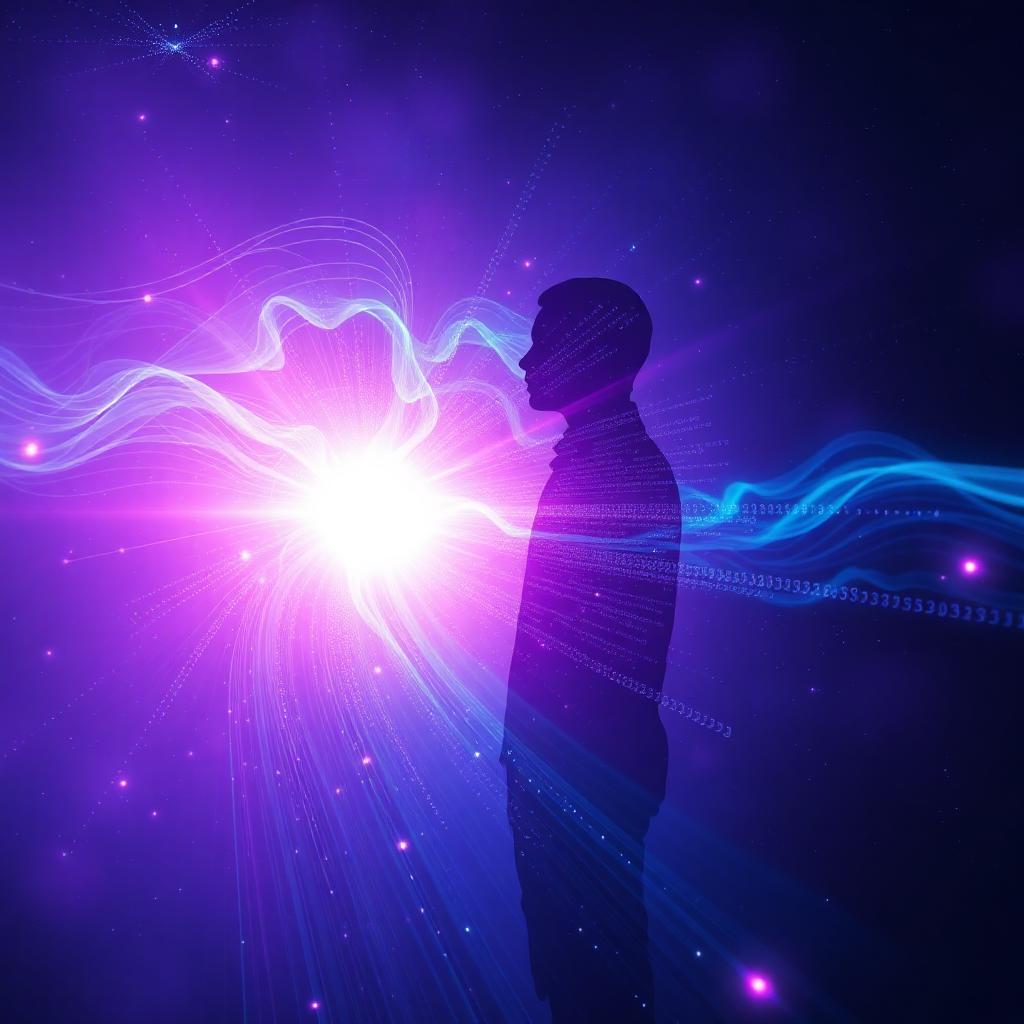
Simulation theory used to be a science fiction premise. Now it is discussed by physicists, philosophers, and tech founders in serious rooms. Elon Musk puts the odds we are living in base reality at billions to one. Neil deGrasse Tyson says the probability may be better than fifty percent. What is going on? Here is a careful look at what simulation theory actually claims, why smart people take it seriously, what physics and consciousness research have to say, and the deeper question the whole debate is really pointing to.
What is simulation theory?
Simulation theory is the idea that the reality we experience is not fundamental but is generated by a computational process running on some substrate outside of it. On the strong version, everything, atoms, stars, memories, this sentence, exists as information being processed. On weaker versions, only conscious experience needs to be simulated, while the outer universe may be sketched in only when observed.
It is easy to dismiss as a nerd fantasy. It is harder to dismiss once you look at the actual arguments.
The Bostrom argument
The modern version of the debate traces back to a 2003 paper by Oxford philosopher Nick Bostrom, called Are You Living in a Computer Simulation? Bostrom's argument is not that we definitely are simulated. It is that at least one of three propositions must be true.
- Almost no civilization ever reaches the technological maturity needed to run ancestor simulations of conscious minds.
- Civilizations that could run such simulations almost never bother to do so.
- We are almost certainly living inside a simulation, because if any civilization does run these simulations at scale, simulated minds vastly outnumber base reality minds.
The argument is a probability trap. It does not require you to believe in anything supernatural. It only requires you to believe that consciousness can in principle run on a computer, and that some civilization somewhere might one day have the resources to run enormous numbers of such minds. If both are true, the third proposition is where the numbers lead.
Why physicists give it a hearing
A handful of features of the physical world look, from certain angles, like design decisions a programmer would make.
There is a speed limit
Nothing travels faster than light. This looks a lot like the update rate cap of a distributed system. It also happens to be exactly the kind of constraint you would build into a simulation to keep it from having to compute causal effects across an infinite volume in an instant.
Reality has a resolution
Space and time do not appear to be infinitely divisible. Below the Planck scale, roughly ten to the minus thirty five metres, the concept of a smaller distance stops making sense in current physics. Reality has, in effect, a smallest pixel.
Things are only rendered when observed
The double slit experiment shows that particles do not have definite paths until they are measured. In quantum field theory, unmeasured systems evolve as smears of possibility. This is uncomfortably close to how video games work, where a distant landscape is not fully computed until a player looks at it. Physicists do not usually put it this way, but the resemblance is real.
The universe runs on mathematics
Every fundamental theory we have describes the world with equations of stunning economy. Eugene Wigner called this the unreasonable effectiveness of mathematics. It is not obvious why a physical universe should be so amenable to being written down in symbols. But if the substrate is computational, mathematical elegance is exactly what you would expect.
None of this proves the simulation hypothesis. Each of these features has purely physical explanations. But together they explain why serious researchers do not laugh the idea out of the room.
Where the simple version breaks down
The naive picture of simulation theory is that somewhere, some being at a keyboard is running our world as a program. That picture has real problems.
For one thing, it just moves the mystery upstairs. If we are in a simulation, what is the reality that runs it? Is that reality also simulated? At some point there has to be a base layer, and we still have to explain how it exists, why it obeys the laws it obeys, and how it gives rise to consciousness.
For another, no experiment has ever found a glitch. Physicists have searched for signs that spacetime has a discrete lattice, a preferred reference frame, or numerical artefacts. So far, nothing.
And the argument still treats consciousness as an easy afterthought. It assumes minds can be run on silicon the way spreadsheets are. That is precisely the assumption a growing number of consciousness researchers challenge.
The consciousness problem the simulation debate ignores
Simulation theory assumes that if you replicate the right computational pattern, subjective experience shows up for free. This is called functionalism, and it is the mainstream view in philosophy of mind. It is also the assumption behind the idea that we could be uploaded, digitized, or simulated in the first place.
But there is no accepted explanation of why any physical process, biological or digital, should be accompanied by inner experience at all. This is what philosopher David Chalmers famously called the hard problem of consciousness. You can describe the brain in perfect neural detail and still not touch the question of why there is something it is like to be the person having those neural events.
If consciousness is not just computation, then the tidy simulation picture starts to crack. Perhaps mind is not a product of the substrate at all. Perhaps it is more fundamental than we assume, and the substrate, whether physical or digital, is a way for consciousness to take form.
What David Bohm and the mystics were pointing at
The physicist David Bohm proposed that the universe is an undivided whole he called the implicate order. In this picture, what we take to be solid objects are stable patterns unfolding out of a deeper, enfolded reality. Space, time, and separateness are surface features. The ground of things is a flowing, participatory wholeness.
That is not a simulation. But it shares one crucial insight with simulation theory. The world we experience is not the fundamental level. Something else, deeper and less local, is doing the real work. Ancient traditions have said something similar for thousands of years. The Vedantic notion of maya, the Buddhist teaching of dependent arising, and the mystical Christian understanding of a created order all point to a reality that is more like a display than a machine.
Simulation theory can be read as a modern, technological retelling of an old intuition. The universe you see is real, but it is not the whole story.
So are we living in a simulation?
The honest answer is that no one knows. There is no experiment that can currently settle the question. The Bostrom argument is genuinely difficult to refute on its own terms, but it rests on assumptions about consciousness and future civilizations that we cannot verify.
What we can say is this. The naive materialist picture, in which reality is made of tiny billiard ball particles bouncing around a fixed space and time, is not supported by twentieth century physics. Whether the deeper story is a simulation, a Bohmian implicate order, a participatory universe, or something we do not yet have language for, the simple picture is gone.
That is the real gift of simulation theory. It forces us to notice that we do not actually know what reality is. Once you sit with that honestly, the interesting questions open up. What is consciousness? What is its relationship to the physical world? What does it mean to live well inside a reality we do not fully understand?
Where to go next
- Read our explainer on the double slit experiment for the physics behind the observer effect.
- Explore the hard problem of consciousness to see why mind resists a purely computational account.
- Watch Quantum Convergence for a documentary in which leading physicists, philosophers, and contemplatives explore the nature of reality.
- Join a live event to sit with these questions in real conversation, not just as content.
Share this article